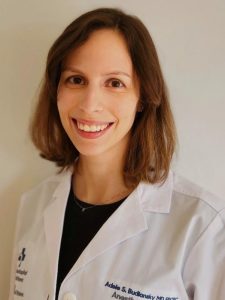




For this issue of the SNACC Newsletter, it is my pleasure to interview Dr. Finn M. Radtke.
Dr. Radtke is an MD, Privatdozent, Associate Professor, and Senior Physician. He also serves as the Head of Research in the Department of Anaesthesiology and Intensive Care at Zealand University Hospital Nykobing F. and the University of Southern Denmark (SDU). He is the past Chair of Scientific Subforum 15 (Geriatric Anaesthesiology) at the European Society of Anaesthesiology and Intensive Care.
He obtained his medical degree from Universität des Saarlandes, Germany, and completed his internships at Vivantes Klinikum Spandau and Charité University Berlin, Germany, where he also earned his advanced degree as a senior researcher and senior lecturer (Habilitation).
Dr. Radtke is the founder, chair, and research lead of the Safe Brain Initiative Research Group and founder and vice chair of the SBI EEG Bootcamp for Anaesthesia educational track and consortium. His primary research interest is to improve patient-centred perioperative care, which includes development, implementation, optimization, and monitoring.
1) Why did you choose a career in anesthesiology? Was there a specific experience that inspired you to pursue this specialty?
Anesthesiology fascinated me early on because it combines physiology, pharmacology, and real-time decision-making in the most vulnerable phases of a patient’s journey—before, during, and after surgery. What ultimately drew me in was the idea that our actions in these moments can fundamentally alter long-term outcomes, especially in fragile populations. A key moment came during my clinical training, when I witnessed the profound difference attentive, individualized anesthesia could make for an elderly patient who recovered without cognitive complications. This sparked my dedication to perioperative brain health and value-based anesthesiology—both of which have since become core elements of the Safe Brain Initiative.
2) How did you develop your research expertise in geriatric anesthesiology and perioperative delirium & cognitive dysfunction?
My research path was shaped by a clinical realization: postoperative delirium (POD) and cognitive decline are not rare, nor are they unavoidable side effects of surgery—they are preventable complications if identified early and managed precisely. I began by integrating observational data and patient-reported outcomes into daily clinical work, which led to translational projects and multicenter collaborations. Eventually, this evolved into the creation of the Safe Brain Initiative (SBI), which unites research, quality improvement, and implementation science. Through SBI, we’ve established platforms to study real-world data, EEG-guided anesthesia, and multi-domain interventions with international partners.
3) How has your research in these fields changed or reinforced your personal clinical anesthesia practice?
It has completely reshaped how I see my role as an anesthesiologist. I no longer focus solely on keeping the patient safe during surgery—I focus on ensuring their brain and quality of life are intact weeks and months later. Thanks to the insights gained from SBI-related research, my practice now routinely includes EEG monitoring to detect states like burst suppression, patient-centered risk assessments, and cognitive prehabilitation strategies. I’ve also become an advocate for embedding outcomes like cognitive recovery and functional independence into standard care metrics, not just clinical endpoints.
4) Can you describe the development and aims of the Safe Brain Initiative?
The Safe Brain Initiative (SBI) is a global, multidisciplinary movement aimed at improving perioperative brain health through patient-centered precision care. It originated from the recognition that cognitive outcomes are often neglected in surgical care despite being crucial for long-term recovery. SBI combines routine clinical quality data, digital tools, multi-omics research, and structured education—like the SBI EEG Bootcamp—to promote evidence-based decision-making. Our mission is to shift perioperative care toward value-based, personalized medicine by preventing neurocognitive complications and empowering both clinicians and patients through meaningful metrics and interventions.
5) In 2024, the European Society of Anaesthesiology and Intensive Care Medicine published an evidence-based and consensus-based guideline on postoperative delirium in adult patients, with you among its expert authors. The recommendations include monitoring intraoperative EEG, including burst suppression. What do you hope to see in terms of future developments in depth of anesthesia monitoring for detection or prevention of postoperative delirium?
The guideline was a milestone in recognizing brain monitoring as a standard of care. What I hope to see next is a broader shift from proprietary indices to raw EEG-based clinical literacy among anesthesiologists. Future developments should prioritize real-time, open-source EEG interpretation, integration with AI decision-support systems, and easy-to-use interfaces that help tailor sedation levels dynamically. Through SBI, we advocate for widespread EEG education and have already launched structured training programs to close this gap. Ultimately, monitoring the brain in real time should be as natural as monitoring the heart.
6) Is there any advice that you can share with our newsletter readers who are in the early stages of their research careers?
Stay clinically grounded but research-driven—let the patients’ needs guide your questions. Identify meaningful, real-world problems and connect with mentors and collaborators who are passionate, generous, and curious. Importantly, don’t wait for the “perfect” setup. The Safe Brain Initiative began with a simple goal: to prevent cognitive harm. What followed was the power of collaboration, structure, and persistence. Build something that reflects your values, start small if you must, and be relentless in advocating for research that improves lives—not just metrics.