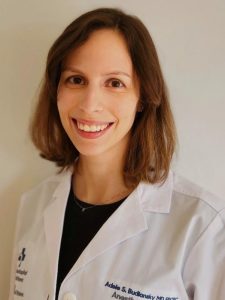




The “Rendezvous with Editor-in-Chief” article highlights international leaders in research, clinical practice, and education in neuroanesthesia and neurocritical care. For this issue of the SNACC Newsletter, it is my pleasure to interview Dr. Monica S. Vavilala.
Dr. Vavilala is a Professor of anesthesiology and pediatrics at the University of Washington with adjunct appointments in Neurological Surgery and Health Systems and Population Health. Dr. Vavilala is a physician scientist with over 25 years of federal research funding and 450 peer reviewed publications in the field of trauma and injury prevention. She has mentored over 30 faculty across disciplines, most of whom are in academic medicine. Her personal area of acute care research is traumatic brain injury. Her community work focuses on research translation and school safety.
1) As a pediatric anesthesiologist, what has led to your clinical and research focus on traumatic brain injury (TBI)?
As a pediatrics resident in Houston, I took care of a critically injured child who ended up having TBI. I remember wondering how to provide evidence based care when the evidence was sparse. This led me to ask a number of research questions in the field of TBI. This interest continued as I trained in anesthesiology and subsequently rose through the ranks as faculty. The ability to practice in a mixed model adult and pediatric trauma center allowed me to answer translational research questions across the age ranges.
2) How has mentorship influenced the course of your career? What do you think makes a good mentor?
Mentorship is perhaps the single most important aspect of an academic career next to broader systems level support. You learn a lot about how to do research, how to think critically, and how to avail of opportunities. Good mentors sponsor those who follow and open doors, and I think the most important role a mentor can play. I have mentored more than 30 trainees, most of whom are in academic medicine and most are scientists, either PhD or MD. I have had a number of mentors who guided me on what to do and what not to do across disciplines, and I have learned a great deal from all. I have attempted to pass on these lessons to those I mentor.
3) You are the only anesthesiologist in the United States to serve on the Brain Trauma Foundation Guidelines Committee. What is the TBI care principle that you emphasize the most to anesthesiology trainees? What is “next” for perioperative TBI care?
Evidence based practice from injury prevention to more reactive practices –both are important. Where there is evidence, I think we should strongly consider implementation. I believe examining our anesthetic practices and examining outcomes is the next step so we can advance our understanding of the role we play in determining outcomes. In doing so, we will provide evidence based TBI care.
4) One of your areas of research is related to improving healthcare equity for children hospitalized with TBI. Are there ways that clinical anesthesiologists can address inequities in the perioperative period?
I think we should examine our practices from the lens of personalized TBI anesthesia care. And if we do this, we automatically will try to provide equitable TBI care. Understanding the role of social determinants of health plays in how patients present for neurosurgery or other procedures affects our encounters, care and outcomes. Being involved in improving acute care is one way to address inequities. For example, assuring interpreter services use for patients whose primary language is not English facilitates patient centered care.
5) You have undertaken many significant leadership roles, including serving on the Association of University Anesthesiologists council and being the 2010-2011 SNACC President. What are some of the most important lessons that you have learned from your leadership experiences?
I have learned many lessons. It is OK to be bold and innovative. It is also important to bring people along and have honest conversations about what motivates people.
6) Is there any advice that you can share with our newsletter readers who are in the early stages of their research careers?
Finding one or more mentors who has your best interest at heart is critical to developing and having a career as a physician scientist. Study what interests you, what you care about, what you have passion for, and what can translate to what funders think is important and will move the needle. They aren’t always the same thing but usually, we can find projects and topics at intersections of both.